
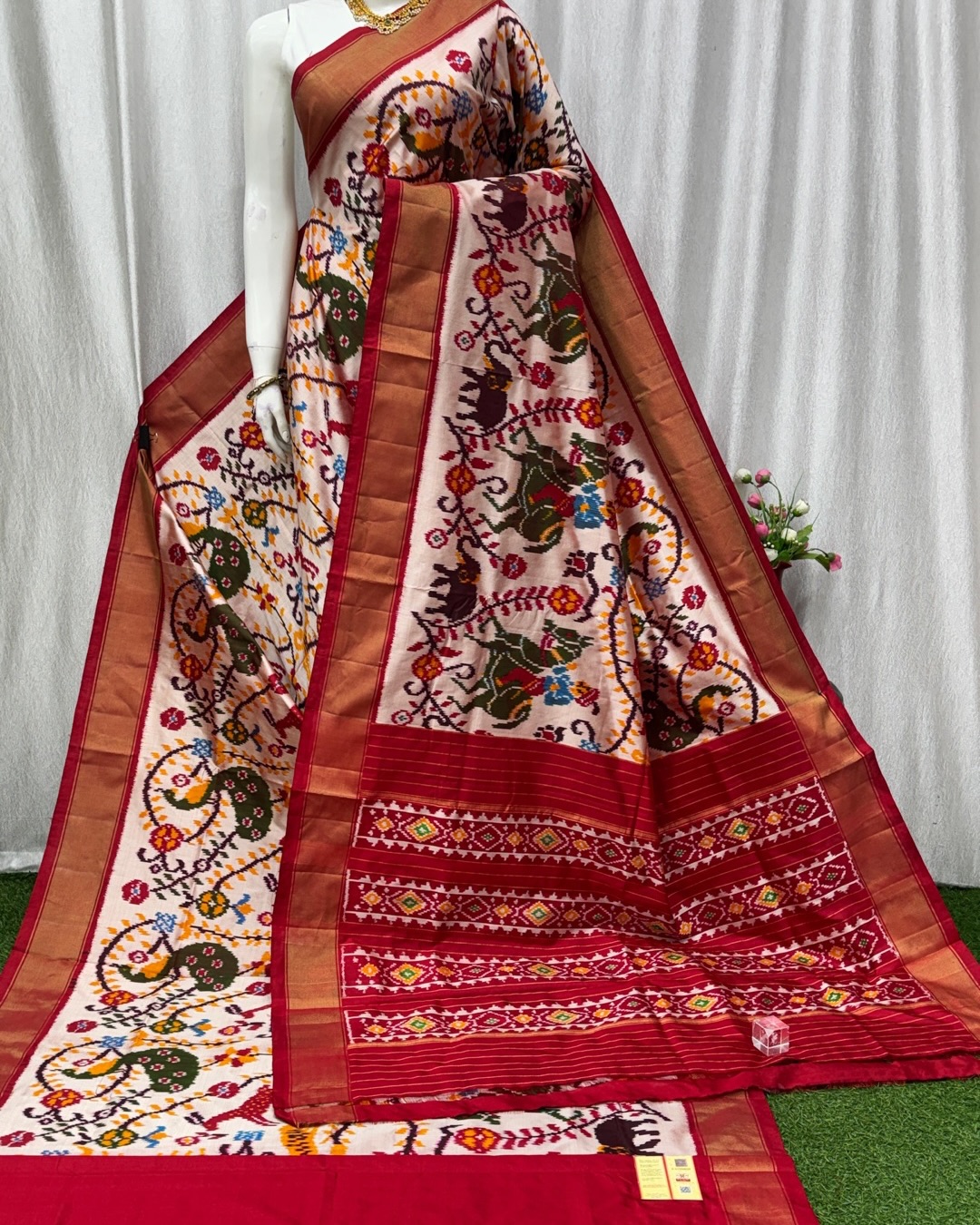
👘 What Is an Ikkat Saree?
An Ikkat saree (often spelled Ikat or Ikkat) is a handwoven textile art where the design is dyed into the yarn before weaving, using a resist-dye technique. This creates its signature blurred, hypnotic patterns that feel both ancient and alive.
The word Ikat comes from the Malay-Indonesian word meaning “to tie,” reflecting the complex process of tying and dyeing threads before they are woven into fabric. Mavuris
🧶 Why It’s Special
Think of Ikkat as design inside the threads, not on the fabric. The patterns — geometric diamonds, chevrons, florals, abstract motifs — are planned mathematically and require seasoned artisanship. The result is a saree with a depth and rhythm you don’t see in printed fabrics. Mavuris
🇮🇳 Regional Variants of Ikkat Sarees
India’s handloom legacy shines through different Ikkat traditions:
📍 Pochampally Ikkat (Telangana)
Perhaps the most iconic Indian Ikkat, known for crisp geometric patterns and often woven in silk or cotton. Wikipedia
📍 Sambalpuri Ikkat (Odisha)
Called Bandha, these use symbolic motifs like conch, flower and weave using tie-dye on both warp and weft yarns. Wikipedia
📍 Patola (Gujarat)
A double Ikkat masterpiece where both warp and weft are resist-dyed — rare, time-intensive and luxurious. Mavuris
Each style has its own palette, motifs and cultural story woven into the cloth. Mavuris
💡 Occasions and Styling
Ikkat sarees are versatile:
• Festive & weddings: Rich silk Ikkats with vibrant patterns
• Ethnic events: Classic handloom texture for cultural flair
• Everyday elegance: Cotton Ikkat for comfort and style
Pair with minimal jewelry for a contemporary look or traditional pieces for weddings and festivities.